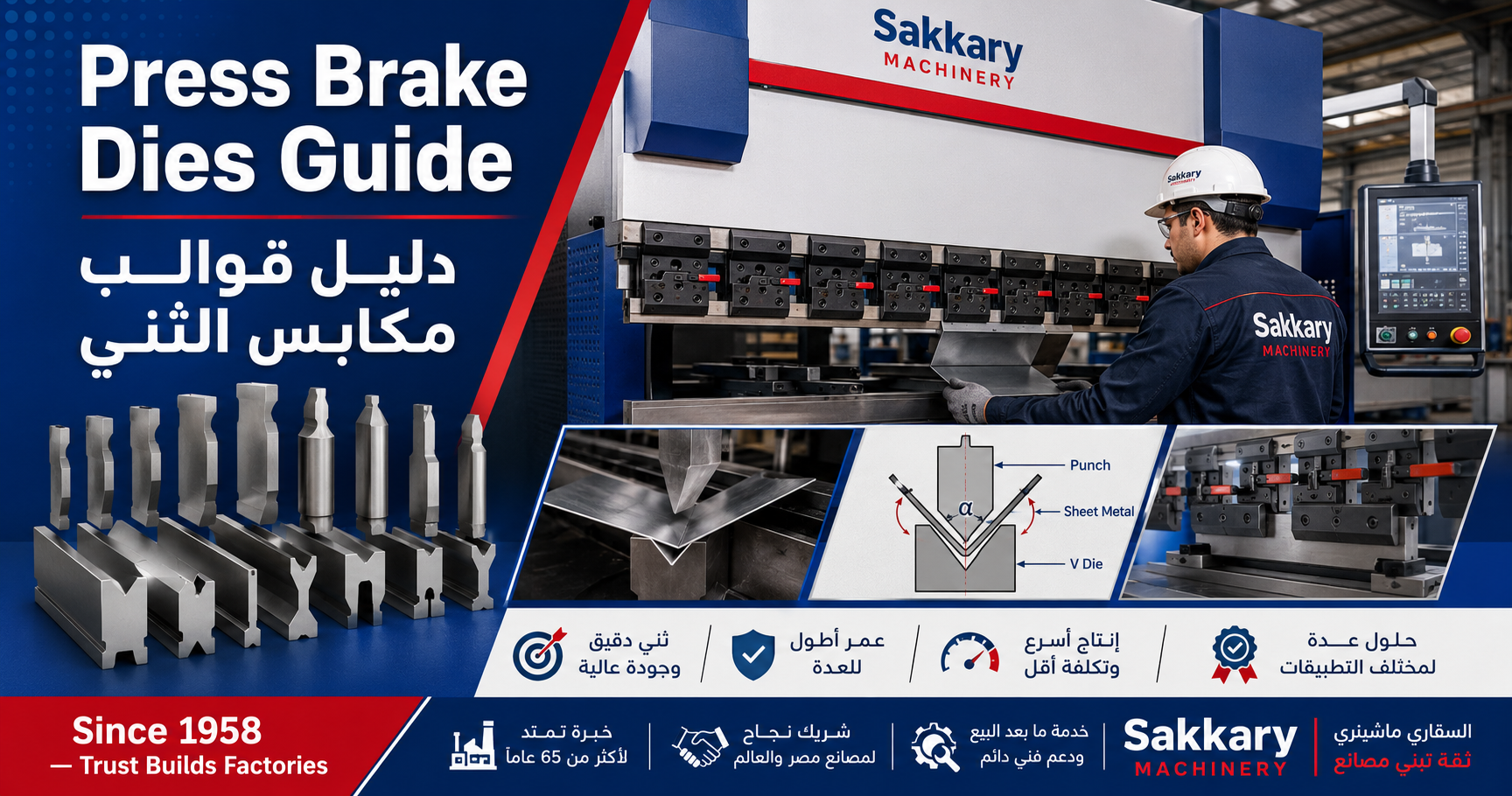
Press Brake Dies Guide: How to Choose the Right Tooling for Accurate Metal Bending
Press Brake Dies Guide: How to Choose the Right Tooling for Accurate Metal Bending
Introduction
In sheet metal manufacturing, the quality of the final bend depends not only on the press brake machine itself but also on the tooling used during the bending process. Selecting the correct press brake dies and punches directly affects accuracy, production speed, tooling life, and product quality.
Many manufacturers invest in advanced press brake machines but overlook the importance of choosing the proper tooling configuration. The result can be excessive tool wear, inaccurate bends, damaged materials, and increased production costs.
This guide explains the most common types of press brake dies, how they are used, and how to select the right tooling for different applications.
1. What Are Press Brake Dies?
Press brake dies are specialized tools used together with punches to bend sheet metal into specific shapes and angles.
The punch applies force from above, while the die supports the material from below and controls the bending geometry.
Together, the punch and die determine:
• Bend angle
• Bend radius
• Material deformation
• Product consistency
• Production efficiency
Without proper tooling selection, even the best press brake machine cannot achieve optimal results.
2. Main Components of Press Brake Tooling
A typical tooling setup consists of:
Punch
The upper tool attached to the ram.
Functions:
• Creates the bending force
• Defines internal bend geometry
• Produces special bend profiles
Die
The lower tool mounted on the bed.
Functions:
• Supports the sheet
• Controls bend opening
• Influences bend radius and force requirements
Clamping System
Secures punches and dies in position.
Benefits:
• Fast tool changes
• Improved accuracy
• Reduced setup time
3. Common Types of Press Brake Dies
V Dies
The most widely used tooling type.
Applications:
• General sheet metal fabrication
• Cabinets
• Electrical enclosures
• HVAC components
Advantages:
• Versatile
• Cost-effective
• Suitable for most materials
Multi-V Dies
Contain several V openings in one die block.
Advantages:
• Quick setup changes
• Reduced tooling inventory
• Higher flexibility
Best for workshops handling multiple material thicknesses.
U Dies
Used when a U-shaped bend profile is required.
Applications:
• Channels
• Structural components
• Specialized fabrication projects
Gooseneck Dies
Designed for complex bend profiles.
Applications:
• Deep box sections
• Return flanges
• Parts with multiple bends
Benefits:
• Prevent interference during bending
• Allow complex geometries
4. Common Types of Punches
Standard Punch
Suitable for basic bending operations.
Acute Angle Punch
Used for sharp bends and precise angles.
Gooseneck Punch
Ideal for complex formed parts.
Radius Punch
Designed to produce larger bend radii and reduce material stress.
5. How to Select the Correct Die Opening
Choosing the correct V-opening is one of the most important decisions.
A common guideline is:
V Opening = 6 to 10 × Material Thickness
Examples:
• 1 mm steel → 6–8 mm V opening
• 2 mm steel → 12–16 mm V opening
• 3 mm steel → 18–24 mm V opening
Using an opening that is too small may damage tooling and increase tonnage requirements.
Using an opening that is too large may reduce bending accuracy.
6. Factors to Consider When Choosing Tooling
Material Type
Different materials require different tooling configurations.
Examples:
• Mild steel
• Stainless steel
• Aluminum
• Copper
• Galvanized steel
Material Thickness
Thicker materials require:
• Larger die openings
• Higher tonnage
• Stronger tooling
Bend Radius Requirements
Product drawings may specify internal radii that influence tooling selection.
Production Volume
High-volume production may justify:
• Premium tooling
• Hardened dies
• Quick-change systems
Product Complexity
Complex parts often require:
• Gooseneck tooling
• Special punches
• Custom tooling solutions
7. Common Tooling Problems and Solutions
Problem: Inaccurate Bend Angles
Possible Causes:
• Incorrect die opening
• Material variation
• Machine calibration issues
Solution:
• Verify tooling selection
• Check machine setup
• Use angle measurement systems
Problem: Tool Marks on Material
Possible Causes:
• Worn tooling
• Improper tooling alignment
Solution:
• Replace damaged tooling
• Use protective tooling options
Problem: Excessive Tool Wear
Possible Causes:
• Incorrect tonnage
• Poor material handling
Solution:
• Follow tooling capacity guidelines
• Implement preventive maintenance
8. Tooling Maintenance Best Practices
To maximize tooling life:
• Clean tooling after use
• Store tools properly
• Inspect regularly for wear
• Lubricate where required
• Avoid overloading
• Protect tooling from corrosion
A preventive maintenance program significantly reduces downtime and replacement costs.
Why Choose Sakkary Machinery?
Since 1958, Sakkary Machinery has been helping manufacturers select the right machinery, tooling, and production solutions.
We provide:
• Press brake machines for different production requirements
• Tooling consultation and selection support
• Technical guidance before purchase
• Installation and commissioning
• Operator training
• After-sales service and spare parts support
Our goal is not simply to sell equipment, but to help factories improve productivity, quality, and long-term profitability.
Contact Sakkary Machinery
Looking for the right press brake tooling or bending solution?
Our technical team can help you choose the ideal machine, punch, and die combination for your application.
Sakkary Machinery
Since 1958 — Trust Builds Factories
Contact us today for technical consultation and customized solutions.